
JavaScript is a prototype-based language, which means objects can inherit properties and methods from other objects.
This inheritance happens through something called the Prototype Chain.
Understanding the prototype chain is essential because it explains how JavaScript objects share functionality and reuse code efficiently.
In this guide, we will explain the prototype chain in a simple way with practical examples, so developers at every level can understand it easily.
What is a Prototype in JavaScript?
Before understanding the prototype chain, we must understand what a prototype is.
In JavaScript, every object has an internal property called:
[[Prototype]]This property points to another object.
That object is called the prototype.
The prototype allows objects to inherit properties and methods from other objects.
What is the Prototype Chain?
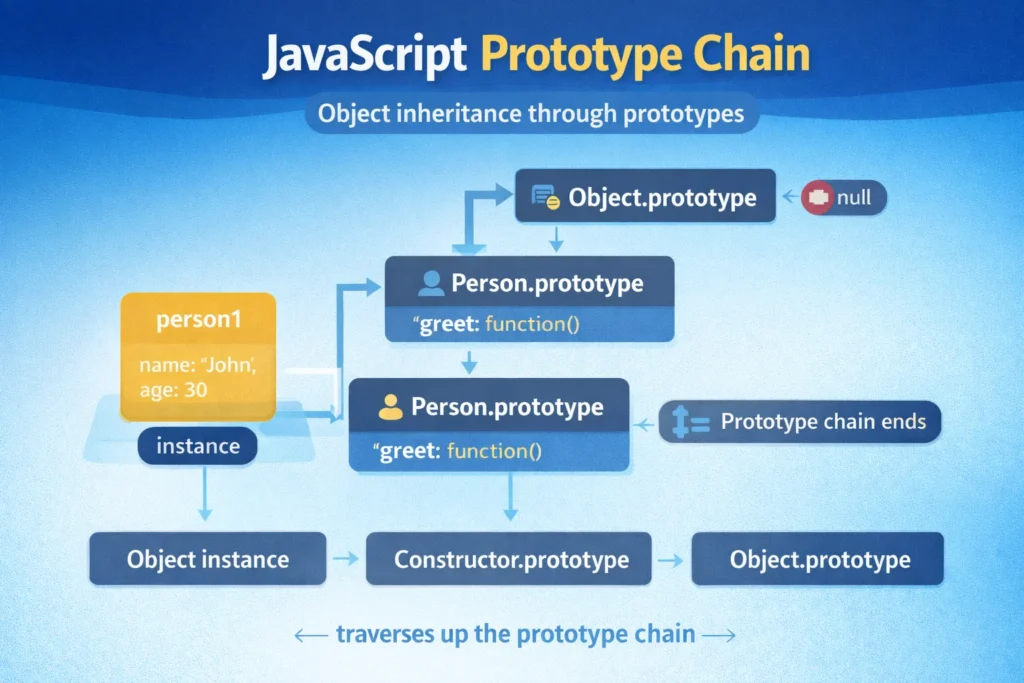
The prototype chain is the process JavaScript uses to search for a property or method when it is not found in the current object.
When you access a property:
- JavaScript first checks the object itself
- If not found, it checks the object’s prototype
- Then it checks the prototype’s prototype
- This continues until JavaScript reaches null
This sequence of prototypes is called the prototype chain.
Simple Example of Prototype Chain
function Person(name) {
  this.name = name;
}

Person.prototype.sayHello = function () {
  console.log("Hello " + this.name);
};

const user = new Person("Mickey");

user.sayHello();How JavaScript Searches for sayHello()
When user.sayHello() runs, JavaScript checks:
user object
↓
Person.prototype
↓
Object.prototype
↓
nullSince sayHello() exists inside Person.prototype, JavaScript executes the function.
Visual Representation of Prototype Chain
Example chain structure:
user
 ↓
Person.prototype
 ↓
Object.prototype
 ↓
nullEvery JavaScript object eventually inherits from Object.prototype, which is the top of the prototype chain.
Accessing an Object’s Prototype
You can check the prototype of an object using:
Modern Method
Object.getPrototypeOf(obj)Example:
function Person(){}

const user = new Person();

console.log(Object.getPrototypeOf(user) === Person.prototype);Output:
trueOlder Method
obj.__proto__However, __proto__ is considered deprecated, so developers should prefer Object.getPrototypeOf().
Why the Prototype Chain is Important
The prototype chain plays a major role in how JavaScript works.
1. Enables Inheritance
Objects can inherit properties and methods from other objects.
2. Improves Memory Efficiency
Instead of duplicating methods in every object, they are stored once in the prototype.
3. Promotes Code Reusability
Developers can reuse shared methods across multiple objects.
4. Core Concept of JavaScript
Many frameworks like React, Angular, and Node.js rely on prototype-based behavior internally.
Prototype Chain with Constructor Functions
Example:
function Animal(name) {
  this.name = name;
}

Animal.prototype.sound = function () {
  console.log("Animal makes sound");
};

const dog = new Animal("Tommy");

dog.sound();Here the lookup chain becomes:
dog
↓
Animal.prototype
↓
Object.prototype
↓
nullCommon Interview Question
What happens when a property is not found in the object?
JavaScript automatically searches the prototype chain until it finds the property or reaches null.
Key Points to Remember
✔ Every JavaScript object has a prototype
✔ Prototypes create a chain of inheritance
✔ Property lookup travels up the prototype chain
✔ The chain always ends with null
Conclusion
The prototype chain is a fundamental concept that powers JavaScript’s inheritance system.
It allows objects to share properties and methods efficiently while keeping memory usage low. By understanding how the prototype chain works, developers can write cleaner, more efficient, and scalable JavaScript code.
Whether you are a beginner or an experienced developer, mastering the prototype chain will help you better understand JavaScript’s object model and inheritance system.