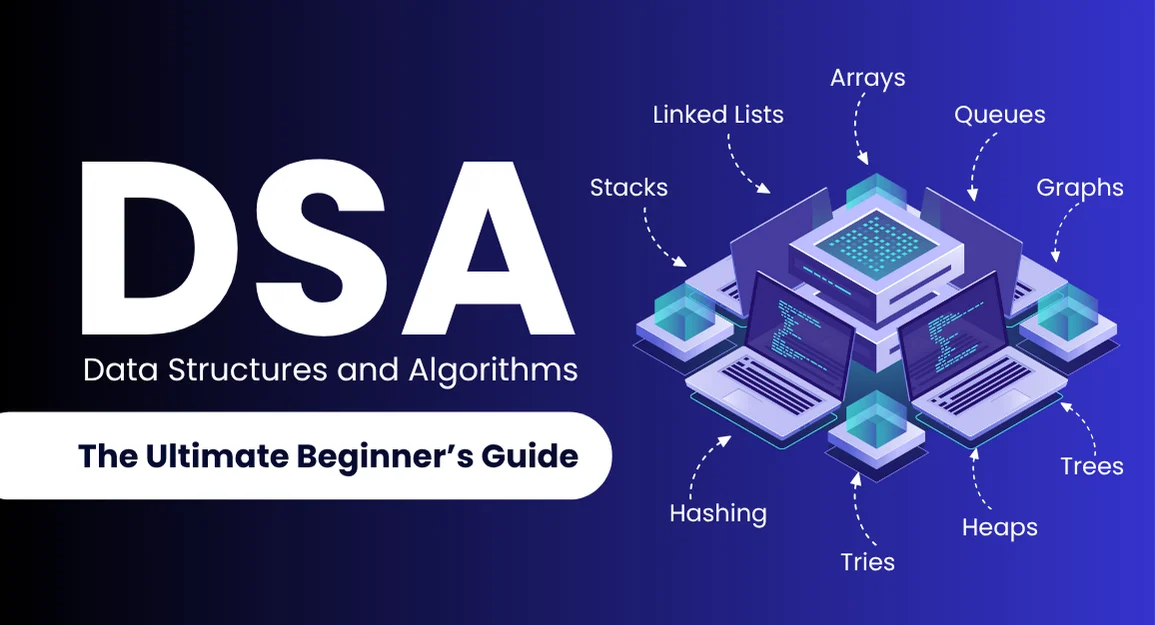


Introduction to DSA
Last Updated: April 30, 2025
Understanding data structures and algorithms is like having a secret recipe for building faster, smarter software. When you master DSA, you gain the skills to solve complex problems quickly, which can make your code more efficient and scalable. Whether you’re working on a search engine, social media platform, or a financial app, DSA plays a key role.
The Significance of Data Structures and Algorithms in Computer Science
Data structures and algorithms are the backbone of all computer programs. They help you manage resources better, run faster, and save memory. For example, an app that sorts thousands of user requests or finds the shortest path in a map uses these concepts.
According to a survey by Stack Overflow, proficiency in DSA is among the most wanted skills for software developers. Companies look for programmers who can write optimized code that handles large data easily. Knowing DSA also leads to cleaner and more reliable code, making you stand out in your field. It’s not just about coding; it’s about creating innovative solutions that work smoothly.
Understanding the Basics of Data Structures and Algorithms
Let’s start with some key ideas. Data structures are ways to store and organize data, like lists or trees. Algorithms are steps or instructions to solve a problem or process data. When you write efficient code, you’re often relying on knowing how to use data structures and algorithms correctly.
Two big concepts are also important. Time complexity measures how fast an algorithm runs as data grows, while space complexity shows how much memory it uses. Mastering these helps you write code that scales well.
The journey from simple problems to complex systems involves learning starting with basic data structures, then moving on to sorting, searching, and graph algorithms. As your skills grow, you’ll tackle more advanced topics like dynamic programming and optimization techniques.
What Are Data Structures?
Data structures are like containers for data. They help organize information so it can be accessed or modified quickly. Choosing the right one makes a huge difference in how well your program performs.
Types of Data Structures and Their Use Cases
- Arrays and Lists: Store items next to each other. They allow quick access but can be slow to insert or delete items in the middle.
- Stacks and Queues: Follow simple rules—LIFO (Last In, First Out) for stacks and FIFO (First In, First Out) for queues. Used in undo features, task scheduling, and managing requests.
- Trees and Graphs: Help represent hierarchies and networks. Critical in search engines (like Google’s index) or social media friend suggestions.
- Hash Tables: Provide lightning-fast lookups. Used in databases, caching, or password storage.
- Notes: Picking the right data structure depends on the problem. For example, if speed is the priority, hash tables often win.
Real-World Examples of Data Structures in Action
Social media apps use graphs to suggest new friends based on mutual connections. Search engines employ hash tables to quickly find and rank pages. These choices affect how fast systems respond and how much memory they consume.
Fundamental Algorithms Every Developer Should Know
Algorithms are how you process data to find answers. Knowing key algorithms makes coding faster and helps solve puzzles more effectively.
Sorting and Searching Algorithms
- QuickSort: Fast for large data sets, divides data into smaller parts.
- MergeSort: Reliable sorting method, divides then merges. Great for large lists.
- Binary Search: Finds an item in sorted data efficiently. Think of it as flipping through a book pages quickly.
Choosing the right algorithm speeds up your programs significantly.
Recursion and Divide-and-Conquer Strategies
Recursion calls a function within itself. Think of it like breaking a big problem down into smaller pieces. This method simplifies complex tasks like sorting or navigating trees.
Graph Algorithms
- Breadth-First Search (BFS): Explores neighbors level by level. Useful in finding shortest paths or spreading information.
- Depth-First Search (DFS): Goes deep into one branch before backtracking. Used in maze solving or checking network connectivity.
- Shortest Path Algorithms: Dijkstra’s and A*, find the fastest route in maps and navigation software.
Dynamic Programming and Greedy Techniques
Dynamic programming stores solutions to sub-problems for reuse, saving time. Classic problems include the knapsack (best way to pack items) and longest common subsequence (finding similarities). Greedy algorithms make the best local choice at each step, often leading to quick solutions — like how your GPS chooses the fastest route.
Why Data Structures and Algorithms Are Critical for Developers
Optimizing your code means faster and more scalable apps. Proper data structures reduce delays and save memory. For example, choosing a hash table over a list can make lookups a thousand times faster.
Beyond performance, DSA boosts your thinking. It trains you to break down complicated problems into smaller, manageable parts. Your problem-solving skills improve, leading to innovative ideas and better software design.
Many tech giants actively seek DSA skills in their hiring process. Google, Facebook, Amazon, and others value candidates who know how to write efficient, problem-solving code. Continuous learning in this area opens doors to more advanced roles and interesting projects.
Tips for Mastering Data Structures and Algorithms
Start with the Basics
Focus on understanding core data structures, like arrays and linked lists. Master simple sorting and searching algorithms first. Resources such as textbooks, online tutorials, or coding bootcamps can guide your progress.
Practice Regularly Through Coding Challenges
Frequent practice is key. Use websites like LeetCode, HackerRank, or Codeforces to solve problems weekly. Setting small goals helps you stay consistent and improve steadily.
Study Real-World Case Studies
Analyze how companies like Google or Amazon implement DSA concepts in their systems. Learning from real-life applications gives you insight into how this knowledge is used practically.
Collaborate and Join Communities
Engage with other programmers online or in person. Participate in webinars, hackathons, or coding groups. Sharing ideas accelerates learning and opens new perspectives.
Conclusion
Mastering data structures and algorithms is essential for writing efficient, scalable code. It improves problem-solving skills and makes you valuable in the tech world. Keep practicing, study real-world cases, and stay curious. Continuous learning in DSA leads to smarter solutions and greater career growth.
Key Takeaways
- Data structures and algorithms are vital for building fast, efficient programs.
- Understanding core concepts opens doors to more challenging problems and career opportunities.
- Regular practice and analyzing real industrial cases strengthen your skills.
- Staying active in coding communities boosts your knowledge and keeps you updated.
Unlock the power of data structures and algorithms today — your future in software development depends on it.